
How to Create a Game With More Meaningful Player Progression
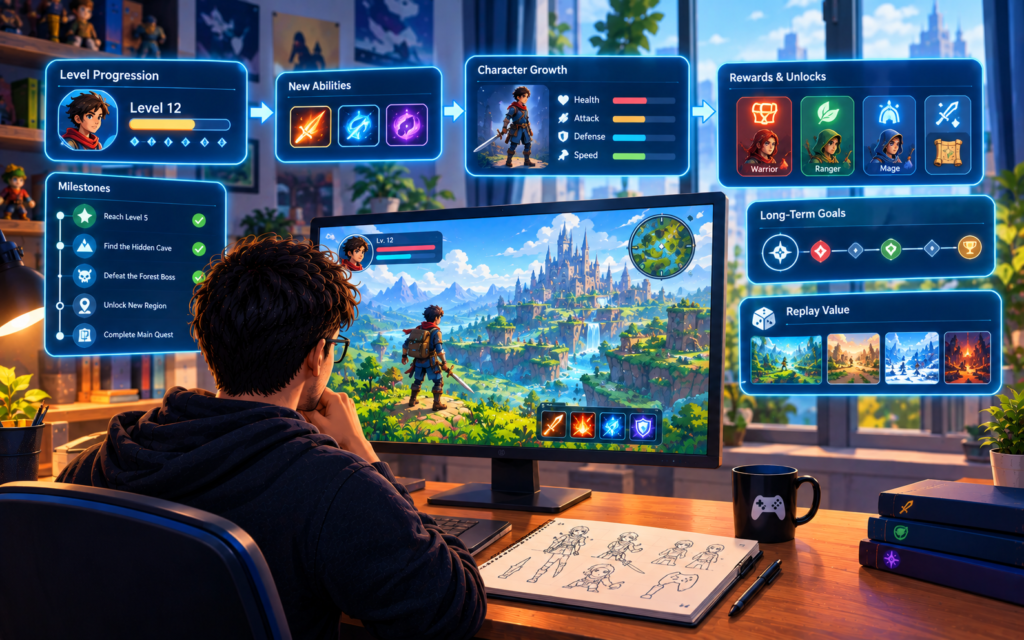
Progression is one of the easiest systems to add to a game and one of the hardest to get genuinely right. Almost any game can slap a experience bar or a leveling system onto its core loop, but that alone doesn’t guarantee players will actually feel like their time is adding up to something worthwhile. Meaningful progression requires players to sense real growth, not just numbers increasing in the background while the actual experience stays exactly the same.
Why Progression Is Easy to Add but Hard to Get Right
A Number Going Up Isn’t the Same as Real Growth
Many games include progression systems that technically function, experience points accumulate, levels increase, but produce no noticeable change in how the game actually feels to play. When progression exists purely as a number without any meaningful shift in capability or experience, players eventually stop caring whether it moves or not.
Players Can Tell When Progression Is Just Padding
Progression systems designed primarily to extend playtime, rather than to genuinely reward player investment, tend to feel hollow fairly quickly. Players are often more perceptive than designers expect at recognizing when a system exists mainly to keep them playing longer rather than to make their time actually feel rewarding.
What Makes Progression Feel Meaningful
Visible, Tangible Change
The strongest progression systems produce changes players can directly see or feel, a new ability, a noticeably stronger character, access to a previously unavailable area. Progression that stays abstract or purely numerical struggles to create the same sense of accomplishment as progression tied to something concrete.
Pacing That Matches Player Investment
Progression that moves too quickly can make a game feel shallow once everything is unlocked, while progression that moves too slowly can frustrate players before they feel like their effort is paying off. Finding the right pacing means understanding how much time players are actually willing to invest before expecting a meaningful return.
A Sense of Direction, Not Just Accumulation
Players stay more engaged when progression feels like it’s building toward something specific, rather than simply accumulating resources or levels with no clear destination. Even a loosely defined long-term goal gives players a reason to care about near-term progress along the way.
Common Progression Design Mistakes
Front-Loading All the Meaningful Rewards
Some games deliver their most exciting progression milestones early, which can leave everything afterward feeling like a letdown by comparison. Spreading meaningful rewards throughout the experience tends to sustain motivation far better than concentrating them all at the beginning.
Making Progression Purely Cosmetic
Cosmetic rewards have their place, but progression that never affects actual gameplay capability can start to feel disconnected from the effort players put in. A healthy progression system usually balances cosmetic rewards with changes that meaningfully affect how the game is played.
Disconnecting Progression From the Core Loop
When progression exists as a separate system layered on top of the main gameplay, rather than something that grows naturally out of how players actually spend their time, it can feel like busywork rather than a genuine extension of the experience.
Designing Systems That Support Real Progression
Tie Rewards to Meaningful Player Actions
Progression feels more earned when it’s directly connected to things players actually chose to do, rather than simply accumulating through passive time spent in the game. This connection between effort and reward is often what separates progression that feels earned from progression that feels automatic.
Build in Both Short-Term and Long-Term Milestones
Relying only on distant, long-term goals can make early progression feel aimless, while relying only on small, immediate rewards can make a game feel shallow over time. Layering both gives players reasons to stay engaged in both the near term and the long run.
Let Progression Unlock New Ways to Play
The strongest progression systems don’t just make a character numerically stronger, they open up new strategies, abilities, or approaches that genuinely change how a player interacts with the game. This kind of progression keeps the experience feeling fresh well beyond the early hours.
Testing Whether Progression Actually Feels Meaningful
Progression systems are notoriously difficult to judge from a design document, since their real impact only becomes clear once players have spent real time moving through them.
Why Long-Term Observation Matters Here
A progression system that feels satisfying in a short demo can reveal itself as repetitive or hollow only after extended play. Testing progression specifically requires watching how players feel after many sessions, not just their reaction to the first hour.
A Platform That Supports Fast Iteration on Progression
Astrocade makes it easier to create a game and adjust progression systems quickly, letting creators test different pacing, reward structures, and milestone placement without needing to rebuild core systems each time something needs refining based on real player behavior.
Seeing Progression-Driven Design in a Real Game
Blox Fruit is a good example of a game built around a clear, ongoing progression structure that gives players a specific reason to keep playing and growing stronger. Games structured around visible, cumulative growth like this tend to have a natural advantage in keeping players engaged over longer stretches of time.
What Still Requires Careful Design Judgment
Deciding What Progression Should Actually Represent
AI-assisted tools can help implement and test progression systems quickly, but deciding what kind of growth genuinely fits a particular game’s identity, whether that’s power, skill, narrative, or customization, is a creative decision that depends on understanding what the game is actually about.
Balancing Progression Against Challenge
Progression that makes a game too easy too quickly can undercut the sense of challenge that made early moments engaging in the first place. Finding the right balance between growing player capability and maintaining meaningful difficulty requires careful, ongoing attention.
Recognizing When Simpler Progression Is Actually Better
Not every game benefits from a deep, complex progression system. Some experiences work better with a simpler structure that doesn’t try to layer in excessive depth, and recognizing when restraint serves a game better than complexity is its own design judgment call.
A Practical Approach to Designing Meaningful Progression
A reasonable process looks like this. Start by defining what kind of growth actually fits the identity of the game, whether that’s power, skill, story, or customization. Tie progression rewards directly to meaningful player actions rather than passive time spent playing. Layer both short-term and long-term milestones so players have reasons to stay engaged at every stage, and test extensively across longer play sessions rather than judging the system based on a short initial impression.
Final Thoughts
Meaningful progression isn’t about how many systems a game layers on top of its core loop, it’s about whether players genuinely feel like their time and effort are producing real growth. Getting this right takes deliberate pacing, a clear sense of what progression should represent, and testing across extended play rather than a single short session, but it’s one of the most reliable ways to keep players invested in a game over the long term.